Prohelion Profinity 2.3
Profinity is a CAN bus and industrial data management platform that connects industrial equipment and vehicles to AI tools, cloud services, APIs, and big data analytics. It reads data from CAN bus adapters and industrial protocols, shows that data on dashboards, and passes it on to the systems that use it. This documentation is for administrators who install and configure Profinity, integrators who connect other systems to it, and developers who extend it.
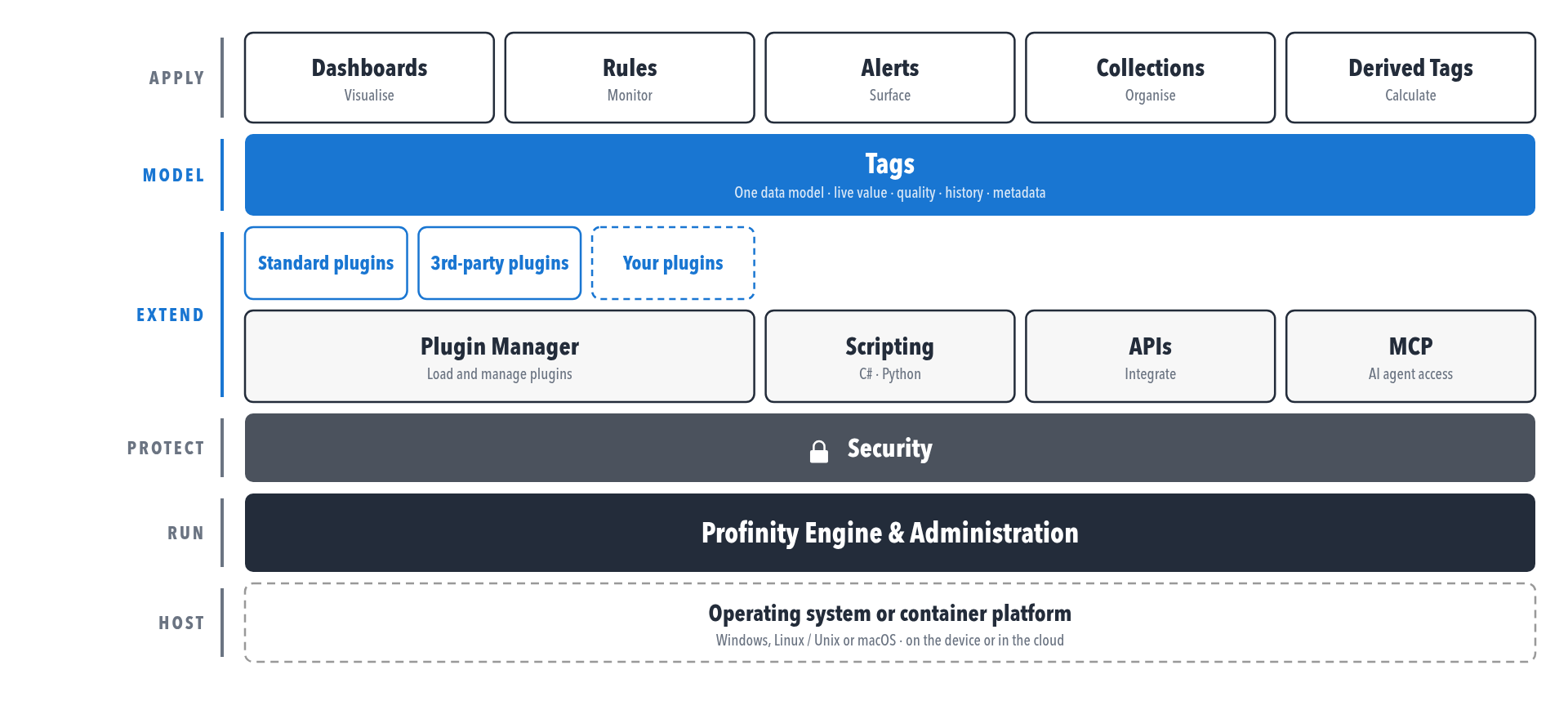
Profinity 2.3 stores and represents all data as Tags, a source-independent data model. Most of its features build on Tags to provide richer data visualisation, transmission, storage, and analysis. For what changed since Profinity 2.2, refer to the Release notes.
Tags give data from any protocol a common data model, for both real-time and historical values. Rules evaluate tag values and raise an alert when a value goes out of range, for example when a battery pack temperature exceeds a limit. Actions respond when a rule fires, for example by writing an entry to the Profinity log.
Tags, Rules, and Actions can then describe both the active system state and the context of that state to Profinity AI. They can also describe it to external AI tools that connect through the Model Context Protocol (MCP) server. These tools can then help identify and address issues.
Plugins add third-party or in-house components to Profinity in the same way as Prohelion components. Scripts automate tasks. Together they extend Profinity for additional components or white-labelled solutions.
Some features need a licensed edition, and Licensing lists what each edition includes.
Where to start
To install Profinity, refer to Install Profinity on Windows, Install Profinity on Linux and macOS, or Install Profinity with Docker. Then follow the Quick start guide to load an example profile and edit a first dashboard. The How to guides cover common tasks, such as connecting a CAN bus adapter, building a dashboard, and logging data. The Glossary defines the terms and acronyms used throughout.
Release notes
Refer to the Release notes for user-visible changes and upgrade notes.