Install Profinity on Windows
The Profinity Setup Wizard installs Profinity as a desktop application on Windows. For Linux and macOS, refer to Install Profinity on Linux and macOS, and for containers, refer to Install Profinity with Docker.
The installer places Profinity in C:\Program Files (x86)\Prohelion\Profinity, and keeps configuration, profiles, and logs in the artefacts directory, which is %LOCALAPPDATA%\Prohelion\Profinity by default.
To upgrade a 2.2 installation, read Upgrade from Profinity 2.2 first.
Install Profinity
Sign in with an account that has administrator rights. The installer sets Profinity up for all users in C:\Program Files (x86).
- Download
Profinity.Install.msifrom the latest Profinity release on GitHub. - Open
Profinity.Install.msiand follow the prompts in the Setup Wizard. - Start Profinity from the Start menu.
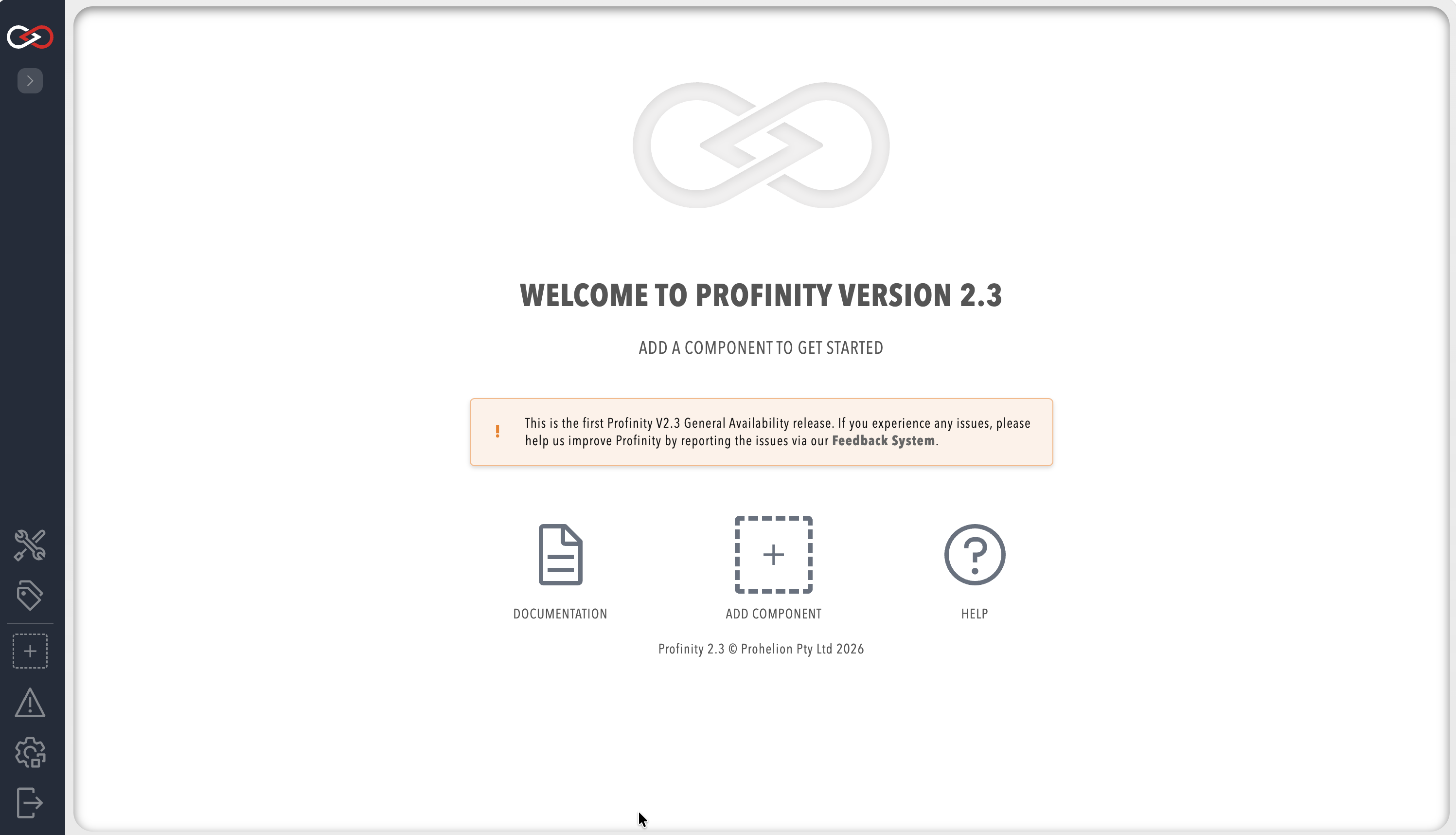
Profinity opens its homepage in the desktop window. To stop Profinity, select Close at the top right of the window.
The desktop window signs in automatically, so you do not need a licence or a web browser. To start using Profinity, work through the Quick start guide.
Open Profinity in a web browser
Most Windows installations do not need this section
With a Desktop licence or no licence, a browser on this computer can reach the sign-in page, but there is no account to sign in with, because user accounts need a Server licence. Use the desktop window instead, which signs in automatically. To sign in from a browser, apply a Server licence.
With Profinity running and a Server licence applied, open the URL set in the Profinity Web panel of System configuration, which you reach from ADMIN in the side menu.
The default URL is http://localhost:18080, and the browser opens the Profinity sign-in page.
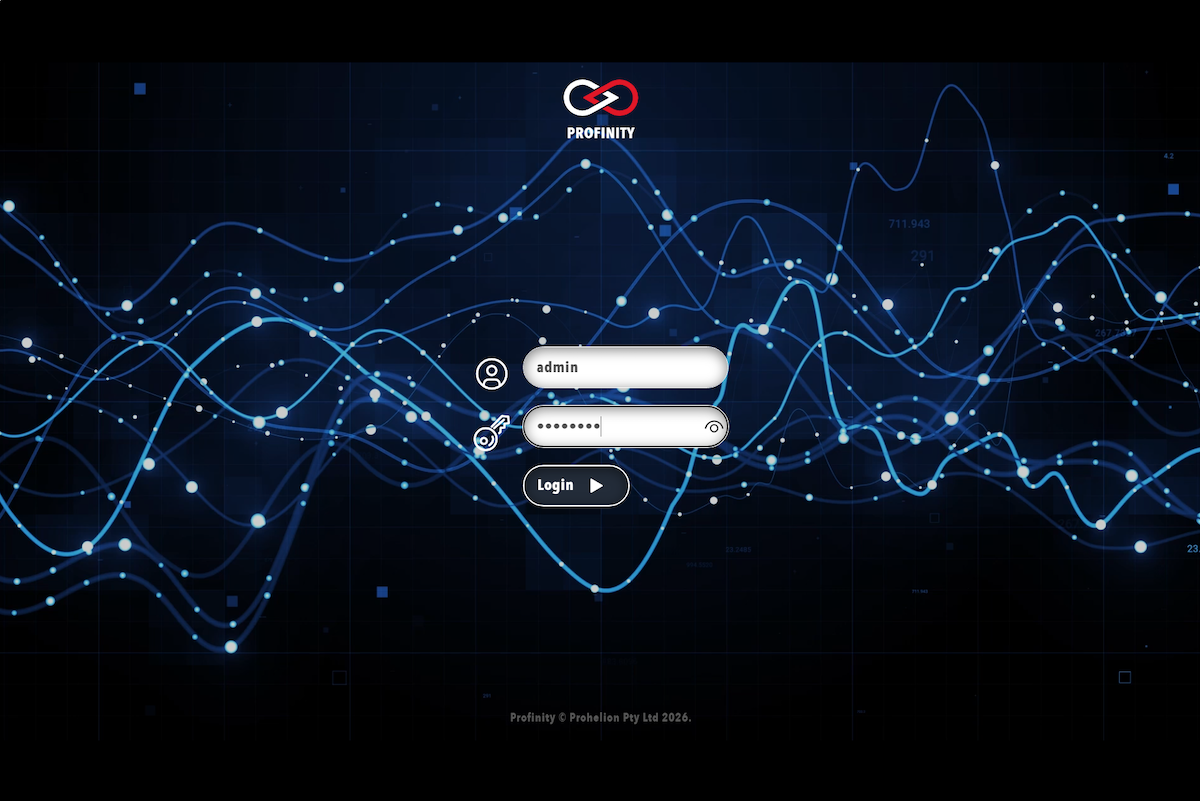
The desktop application window signs in automatically, with no password.
| What you see | Cause | What to do |
|---|---|---|
| The browser sign-in page has no account to sign in with | No Server licence is applied | Use the desktop application window until you apply a Server licence |
| The browser cannot reach the address | Profinity is not running, or another program is using port 18080 | Check that Profinity is running and that no other program is using port 18080 |
Remote access and user accounts
Until a Server licence is applied, the desktop application binds its web interface to the local machine (127.0.0.1) on TCP port 18080 by default, whatever address is set in System Configuration.
Other machines cannot open the web interface.
The installer adds Windows Firewall exceptions for ports 4876 (TCP and UDP) and 42000 (UDP), which the Tritium bridge and the SocketCANd or Candapter CAN adapters use. You do not need to do anything with them unless one of those adapters cannot be reached through the firewall.
A Server licence changes this. Profinity then uses the address set in System Configuration, so other machines can open the web interface and sign in with their own accounts.
With a Desktop licence, the web interface stays on this computer, and a Desktop host skips the 14-day local trial. To apply a Server licence, refer to Apply a licence, and restart Profinity so that the new address takes effect. For the accounts that exist with and without a Server licence, refer to Who can sign in, by installation type.
Next steps
Work through the Quick start guide in the desktop window. No licence or browser sign-in is needed.
To let other people sign in from a browser, apply a Server licence, select ADMIN > Restart Profinity, sign in as admin, change the password, and create accounts with Create a user.
Review the Security guide, and run Profinity in the background with Run Profinity as a Windows service.